Iceland: Walking Through Time

The day after our amazing whale watching tour, we boarded a domestic flight and headed to the southern part of the island. We spent the day exploring Thingvellir National Park, including a walk through ever expanding tectonic plates, the famous geysirs, and of course, more waterfalls.

Upon entering the Thingvellir Park, we were greeted by a beautiful rainbow arcing across the sky. A welcome sight to break up all the gray clouds we’d been under for the past week. Unlike our first visit to the tectonic plates, where we could actually straddle the two plates, in this park we could only see one, the North American plate. The other one was approximately 6 km away with the distance getting wider each year.

I walked along the wall of the plate in awe to stand near something so majestic and ancient. I suppose the Icelanders might have felt the same way because the park also contains “The Law Rock,” the original gathering place for the chieftains where sessions of parliament were held. My photo of the actual rock wasn’t that spectacular, but the view around it is impressive.
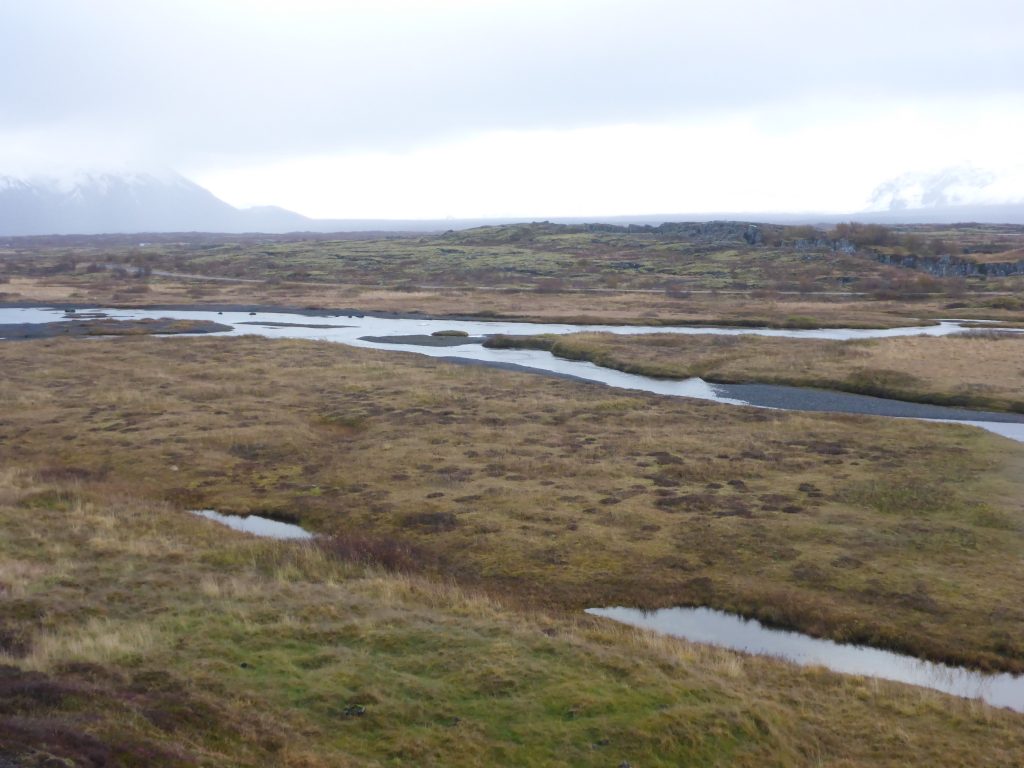
“The low rock” in the park

Looking across the expanse between the two plates, I felt like I was looking at the land dinosaurs must have walked across, preserved and pristine. Like so many other places we’d already seen, it was magical. We even saw fish spawning in one of the rivers!
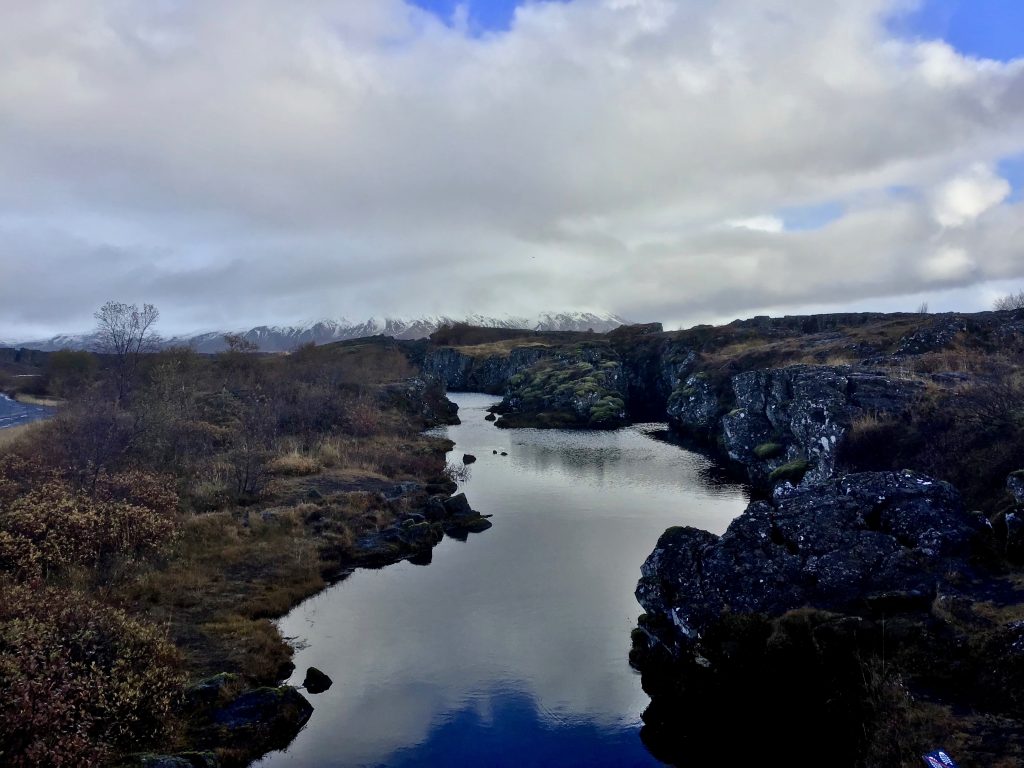
The river between two plates

We left the plates and headed over to the geysirs. The smell was a bit overpowering at times, but the colors were extraordinary. In contrast to the brown, grayish earth were patches of brilliant green and tawny grasses. In the middle of the grassy areas were bubbling puddles of burning hot water.
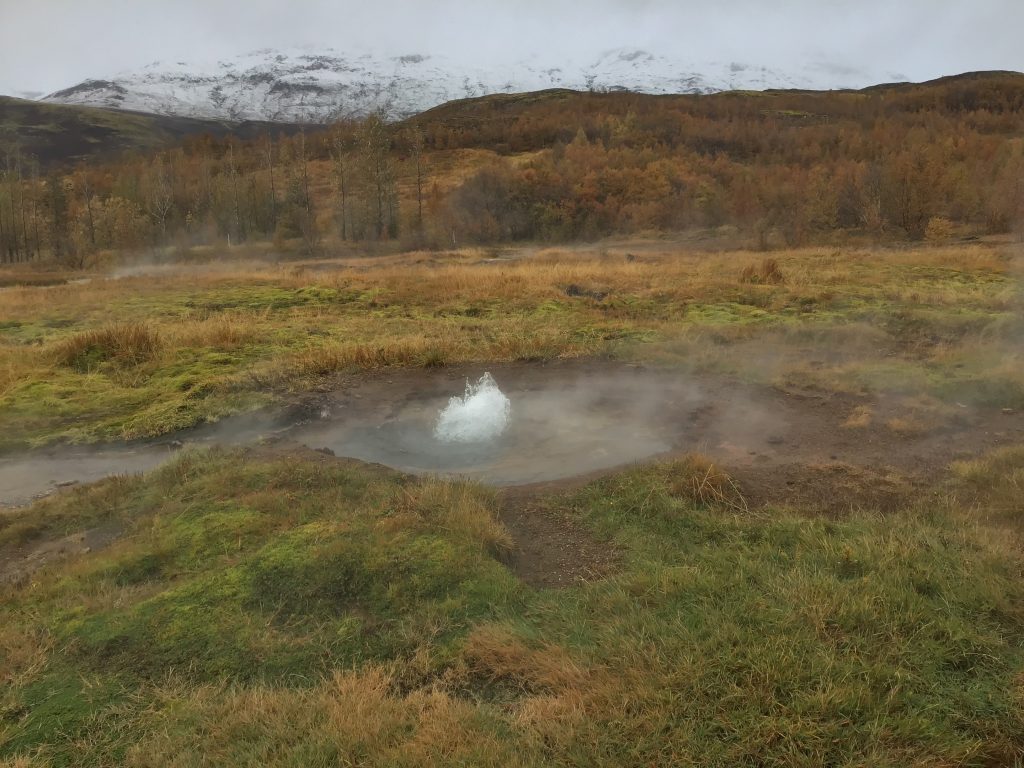
The hot water spring in the middle of the grassy areas

Inside this area of the park was Strokkur, a geysir that erupts frequently, approximately every 5 – 7 minutes. We stood in rapt attention watching the subtle changes happening around the Strokkur announcing when it was going to blow. It was like watching a giant set of lungs breathe in and out, preparing for a giant, explosive exhalation. It was impressive.
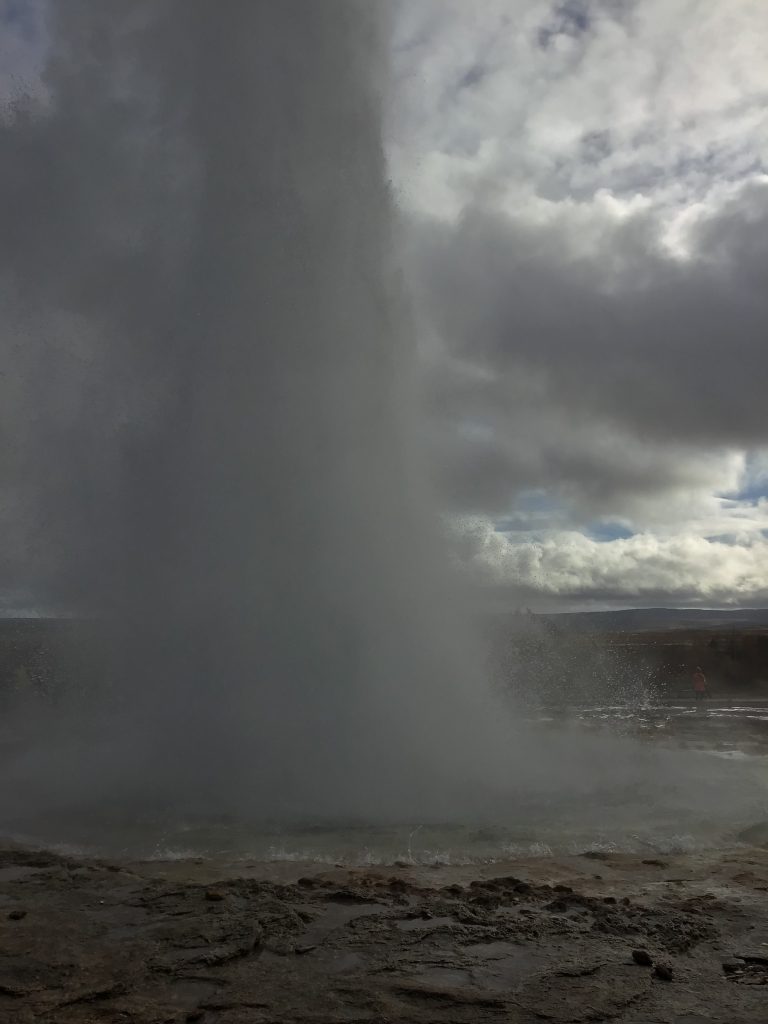
Next stop: waterfalls

Next stop, the famous Gullfoss and Faxifoss. Stay tuned!
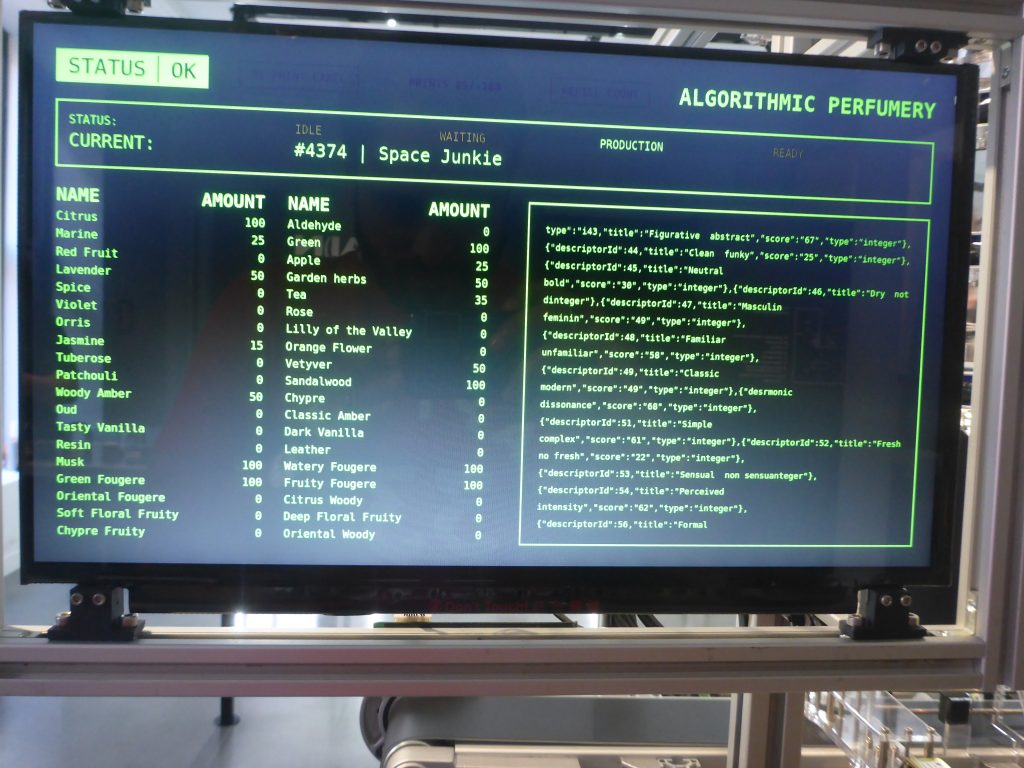
Algorithmic Perfumery

While in Montreal for a conference/vacation, my partner and I went to an amazing exhibit at the Phi Centre. It was called “Hum(AI)n” and explored the idea of “being human in the age of technology.” In case you’re wondering, the (AI) in humain stands for “Artificial Intelligence.”

The exhibit consisted of 5 Virtual Reality (VR) movies, all 15 minutes or less, that covered a range of different experiences and topics, an algorithmic perfumery, and a room where we could interact and speak with an AI digital being, plus a few other things. In one movie, I was a glowing, gold avatar racing across the desert to change the mood of the mob of people constantly around me. In another I watched a short animation of punk music in NYC in the 1970’s. The VR seemed so real that I physically jumped during a scene featuring a NYC subway racing down the tracks and one character who purposefully crossed the yellow line. Even in a VR setting I couldn’t overcome my strong urge to stay far away from a speeding train.

By far my favorite part of the exhibit was the algorithmic perfumery. To start the process, my partner and I each filled out a questionnaire. We were asked about things like our personality, what kinds of things we liked to do, and to assess six sample scents based on our impression of how floral, sweet, woodsy, green, fresh, or sensual/non-sensual we found them. The questions were structured like a Likert scale, but allowed us to slide a dot back and forth on the scale to determine how much we liked, or didn’t like, something.

At the end of the questionnaire, the computer came up with a recipe, customized for each of us.

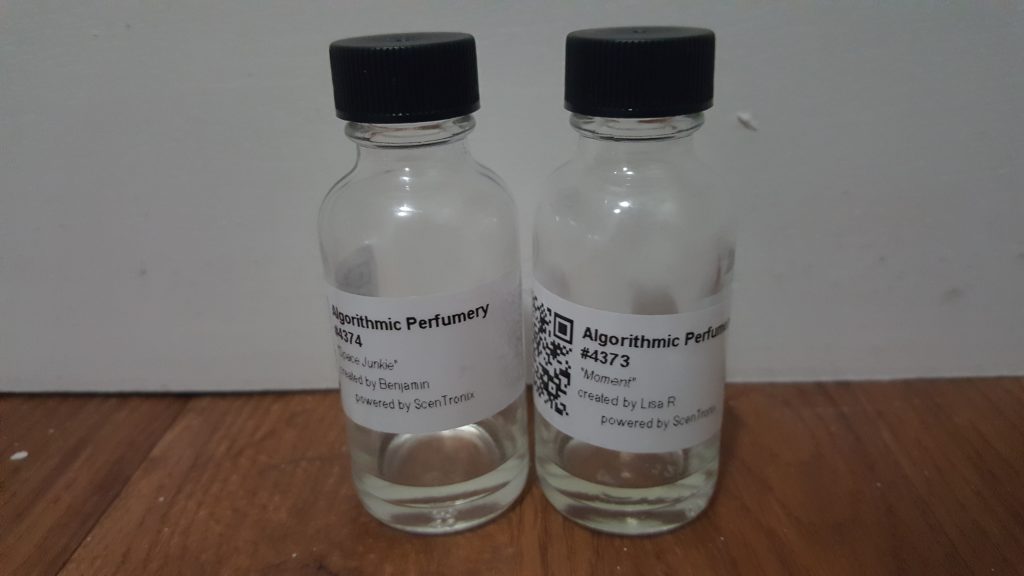
My partner’s unique scent that he named “Space Junkie.”

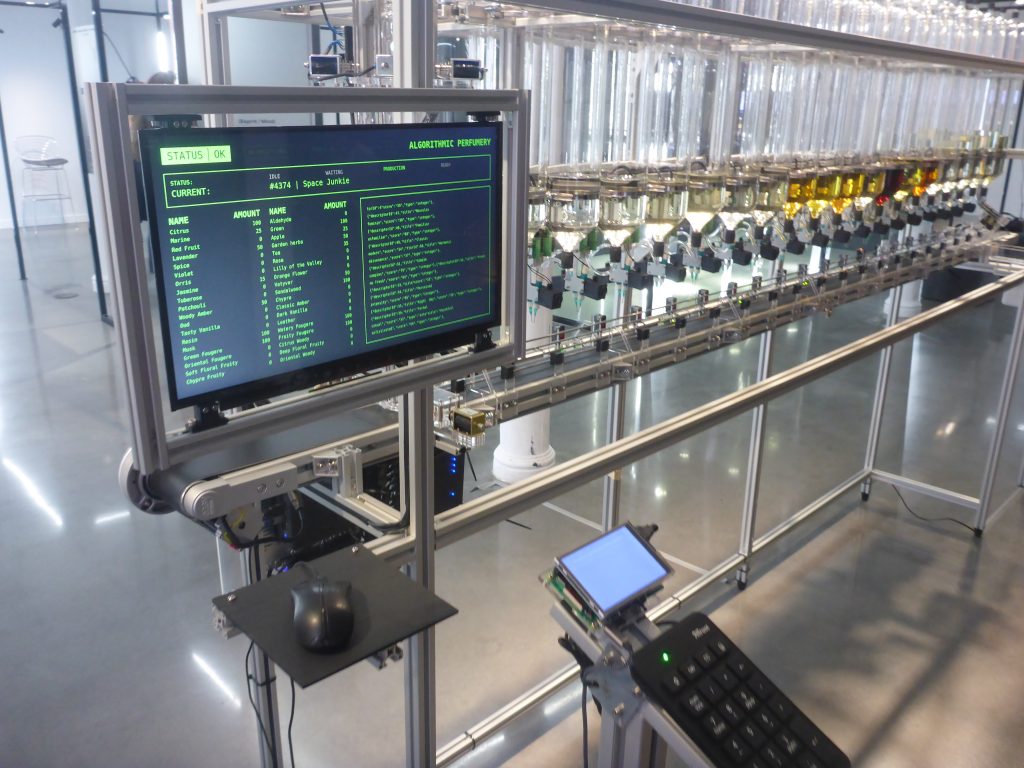
Then a small sample of our recipe was mixed right in front of us!

Each bottle to the left of the screen was filled with a particular scent that was used to create our perfumes.

Within minutes, we were presented with a sample, designed just for us. We smelled it, tried it on, then filled out a follow-up questionnaire to evaluate how we liked it, which is how the AI continues to learn for the next people.

Mine was ok, not woodsy or spicy enough. They got my partner’s name wrong on the bottle, but he seemed to like his.

The big question is, can the AI create perfume better than a human?

What are cookies? And are they bad?

Cookies are tiny packets of data that get saved to your computer every time you use a website. They are used for all kinds of things related to performance (e.g., auto-fill for passwords or logins, remembering your location and preferences, etc.) or tracking your behavior (e.g., how long you spent on a page, which items you selected for your shopping cart, etc.). Companies collect this data about us and create profiles about our habits and preferences, which are then used to send us targeted advertisements, among other things. Learn more in the video below.

Some cookies are required to use a website, but others are sometimes optional and can be inactivated. However, this means that your experience may not be as personalized. It also means you likely won’t receive as many targeted ads, which could be good or bad, depending on how you feel about them.

I’ve noticed pop-ups appearing on almost every website I look at. The pop-ups typically appear at the bottom of the screen, though sometimes at the top, and include some kind of disclaimer about the new privacy policy, cookie policy, etc. of the website. As a result of the GDPR being implemented in May 2018, companies are now required to be more transparent about how they are collecting data about us.

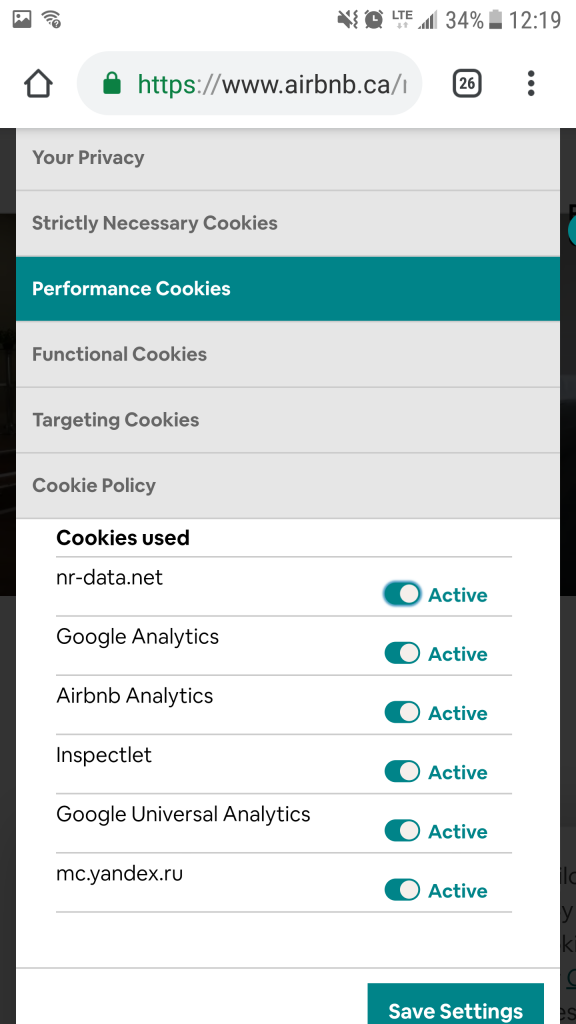
When you see the disclaimer, you always start with two options: accept the cookies and use the service, or reject the cookies and be denied access to the site. Some websites offer a third option to adjust your cookie preferences. If you’re paranoid like me and feel kind of irritated that companies collect personal data about you, then this could be a good option to explore. Rather than simply clicking the close box, select Cookie Preferences instead. You’ll see a whole list of the different types of cookies being used. Most of them can be inactivated, except for the the required ones.

Aside from the “strictly necessary cookies” all of the other ones can be inactivated, by sliding the active button to inactive.

This whole process takes less than a minute. It might alter your experience and make it less customized, but I feel better taking this small action to control the collection of my data and monitoring of my habits.

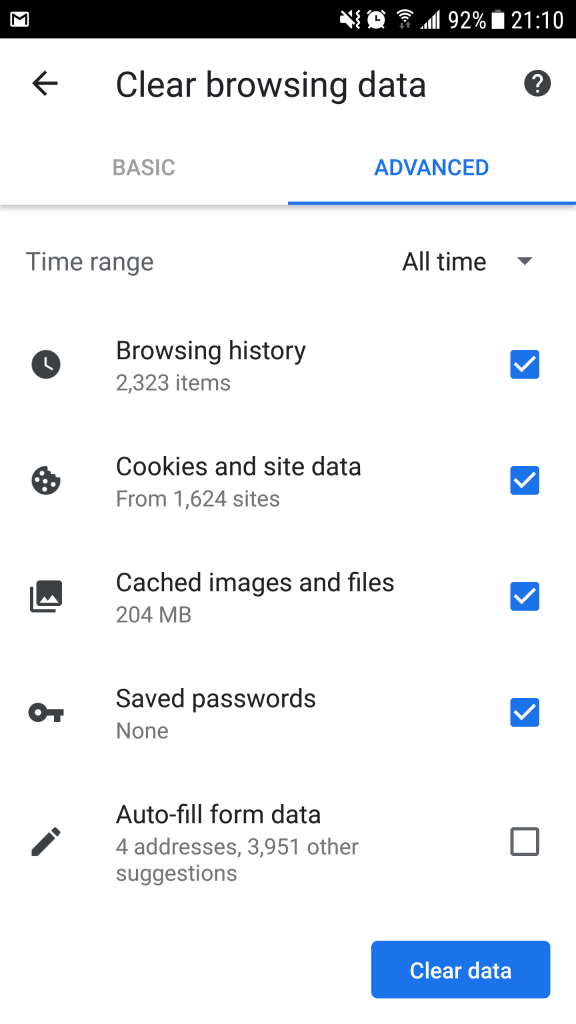
You can also delete saved cookies through your settings. I hadn’t done this in a while and I was shocked to see cookies for 1624 sites on my phone! Delete!

Donation Saturation: Where do I donate all my stuff?

A friend of mine, after reading my book and following many of the clutter-clearing strategies, told me that she had difficulties giving away the stuff she no longer wanted.

“Nobody wants it!” she exclaimed. “I couldn’t find places to take the stuff. Everybody already has too much.”

I have also encountered challenges donating the things I no longer want. The abundance of cheap goods, many of which are also poorly made and break easily, has made it easy and seductive for us to accumulate more than we need. Places like dollar stores, for example, make it convenient and affordable to buy new stuff for every occasion, rather than reusing what we already have. Over time, we amass too much and it can be hard to get rid of when the time comes, if you want to do something other than throw it in the garbage.

In reality, going through your things to purge unwanted/unused stuff has almost become two projects:

  1. the actual process of going through your stuff; and
  2. figuring out how to get rid of it!

Here are some strategies to help you through the second project.

Adjust your expectations of the purging process. Start the project with the understanding that after you decide what you no longer need, there’s another step involved to identify places to take your stuff.

Create separate “discard” piles as you go through your stuff into categories like “donate” (for things still in good condition), “recycle”, “giveaway” (for that special friend you know will love it), and “trash”.

Search the internet for charities, or local community centers, that accept donations. Some may even provide pickup. Be sure to read their criteria.

Search for places that accept specialized recycling for things like electronics or mattresses.

If you live in a building, set-up an area where residents can leave items for others to take for their homes. This works wonderfully for things that still have use, but are time consuming to donate, such as wrapping up glassware.

Make a “free” box in your home. Every time you have a guest, offer them the opportunity to take something from the box. I often do this when I’m moving and I’ve had great success.

It definitely takes more effort to try and find homes for all your discarded items, rather than just tossing everything away, but it’s more sustainable and friendly to the environment.

Iceland: Humpbacks!

A definite highlight of the trip was the day we went whale watching from DalvĂ­k, about a 30-minute drive from Akureyri. Before boarding the boat, we spent several minutes struggling to get into these puffy red jumpsuits to keep us warm while out on the water. Even more importantly, they would keep us afloat if we fell in.

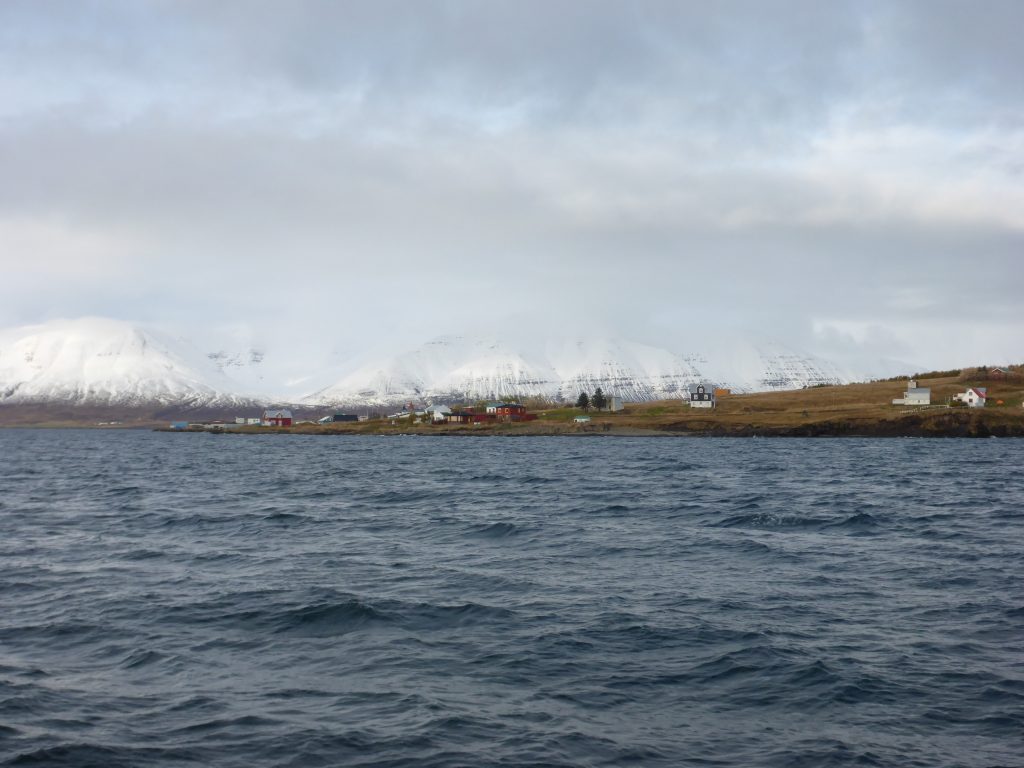
The boat departed and I immediately felt excited to be on the water, smelling the salty freshness and enjoying the gorgeous scenery. We were surrounded by low-lying, snow-capped mountains. In certain directions we could see brightly colored houses dotting the shoreline. If we saw any whales, it would be an added bonus to what was already a spectacular boat ride.

Icelandic town from the boat.

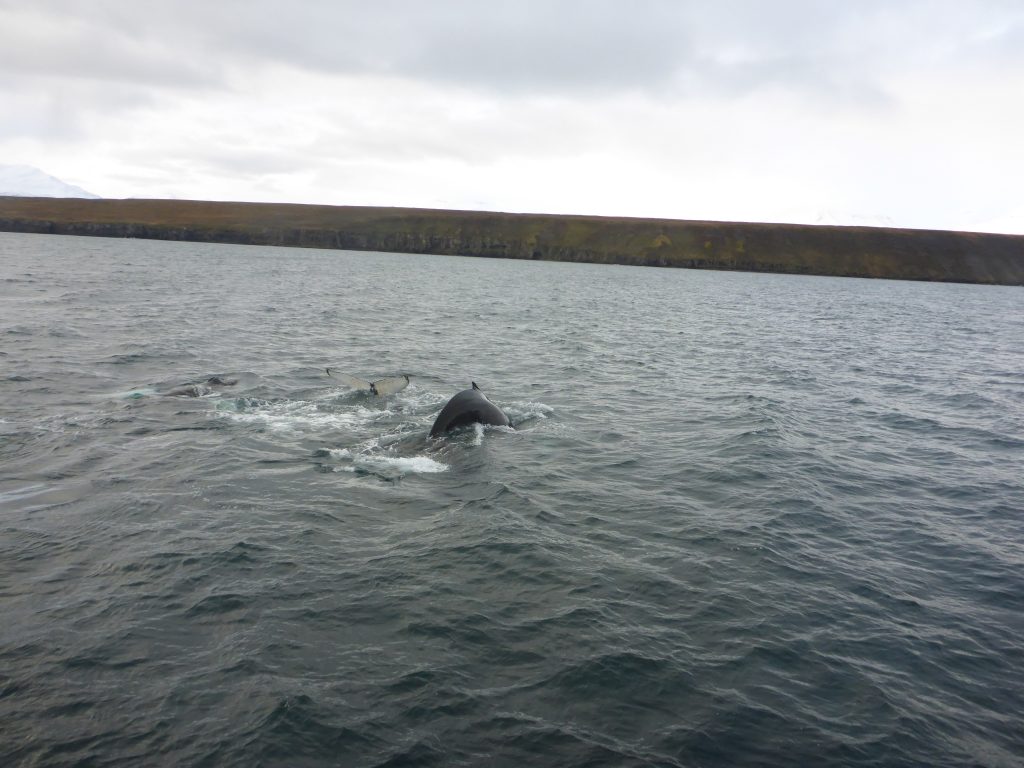
And then we got lucky, as the captain spotted six humpbacks swimming a short distance away. We watched in awe as these majestic creatures moved their massive bodies effortlessly through the water, rising up before plunging down showcasing the underside of their flukes. They came so close I could see their blowholes and the outline of their white flippers beneath the surface of the water. Equally exciting was seeing the spray shoot up in the air from their blowholes.

Three humpbacks in different stages of diving.

I could have watched them for hours, but we had to move on to the next activity, fishing. Before fishing, the boat supplied us with hot chocolate and pinwheel cookies spiraled with cinnamon to warm us up. It was much appreciated. I wasn’t into the fishing, but several people in the group caught cod and haddock, which the captain’s daughter filleted right on the boat.

First she eviscerated the fish and threw the guts overboard, to the delight of the birds that were closely following our boat. Then she carved the fish up and placed the choice pieces in a bucket of water. When we disembarked she grilled them with butter. Delicious!

Happy birds following us for the free lunch.

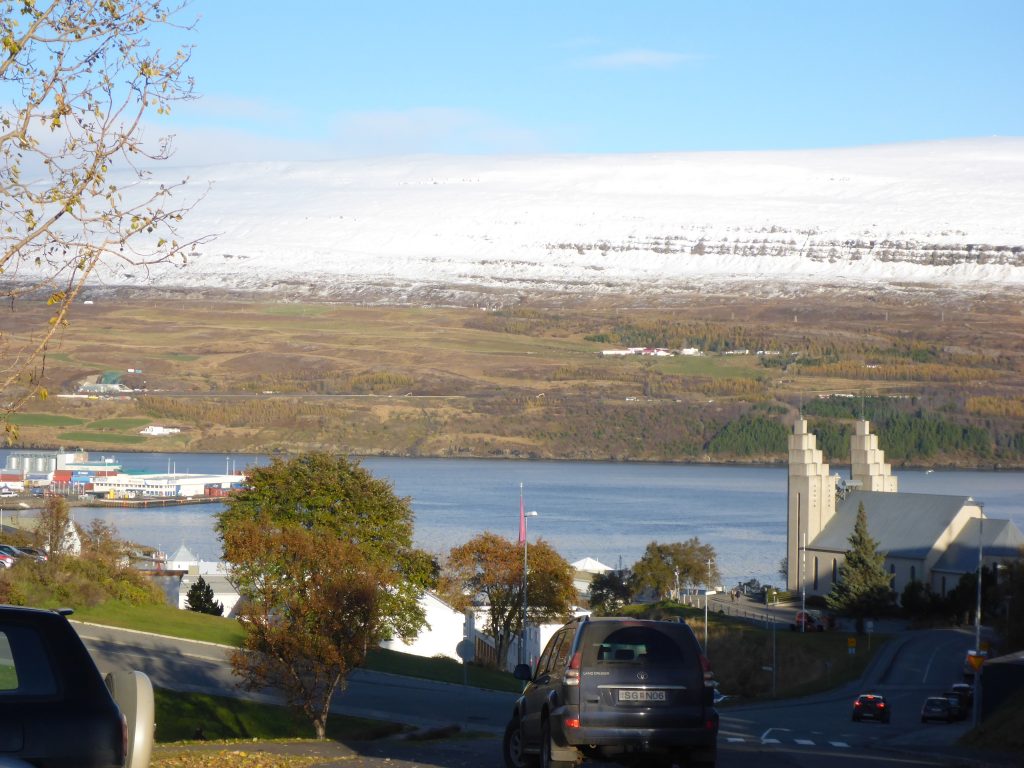
After our fresh fish lunch, we returned to Akureyri for an afternoon of sightseeing and exploring. It was a scenic town from most directions and was easy to get around, even though there was a steep hill.

View of Akureyri from the top of the hill.

Stay tuned for the final days of the trip in the southern part of Iceland.

Read about the other adventures here.

The Trouble with Technology

Technology is supposed to make things easier for us, yet I continually feel that some things are a little bit harder or more time consuming. There’s a big assumption that most people have a base knowledge of how technology works and that programs, or applications, are designed to be idiot proof and intuitive. However, the base level of knowledge that one needs to effectively use and manage technology has never been established.

When I started my blog in 2013, many people told me to use WordPress to build it because it was so easy and intuitive to use. I wouldn’t consider myself a techie, but I do think I’m a tick above average. This is mostly because I had to take courses on it for my library degree. Also, I know if I have to do anything related to technology it’s going to require a lot of time and patience so I set aside several hours to work through any tasks.

Armed with only a rudimentary understanding of how to build a website, I figured with enough time and YouTube videos I could build my blog. I did eventually get the thing built, but it took me a lot of hours. I had no idea how many little steps were required before I could even start to build the blog, such as purchasing a domain name (e.g., thedeletist.com), setting it up with a hosting service, and installing everything.

I spent a lot of afternoons systematically going through all the settings on the backend of my blog and then hitting refresh on my viewing screen to see what the effect was. Although the basic design of my blog has remained the same, I’ve hired two separate techies over the years to do some things on the backend. Needless to say, I didn’t find WordPress easy and intuitive to use.

In a lot of ways, many things with technology have gotten easier and more intuitive. For example, I remember it used to be complicated to add a new network printer to my computer. Now it takes a few clicks. Some apps, like Google Docs, are incredibly easy to start using without any instruction. However, with many other things, I think it’s assumed that the average user knows more than s/he really does about using technology, leading to a lot of wasted time and frustration.