
The Internet of Things and Data Retention Policies

Using Internet of Things (IoT) devices can be beneficial and productive. However, it’s important to understand how everything works. To start, here is a definition of the IoT.

The Merriam-Webster dictionary defines IoT as: “the networking capability that allows information to be sent to and received from objects and devices (such as fixtures and kitchen appliances) using the Internet“. Popular examples of IoT include things like the Nest thermostat, lights, automatic pet feeders, cars, speakers, etc. Basically, “smart” anything is probably part of the IoT.

The potential with IoT is enormous. For example, benefits of the Nest thermostat include regulating house temperatures. This means not keeping an empty house heated. Essentially, it’s a way to monitor your usage, make predictions, and adjust. All of which translates to saving energy and money, in the long run.

Other examples of IoT include wearable devices. Many wearable devices track health data. Some devices can monitor heart rates, stress levels, daily activity, etc. While these devices can be useful, do you feel comfortable having your personal health data collected, stored, analyzed, etc. by a third party?

Plans are in progress to build “smart” cities. Smart cities could include elements like parking spots to alert drivers where one is available. Or things like smart sidewalks that could heat up to melt snow and ice.

The conveniences offered are attractive, but they come at a price. The true cost of personal data collection and usage is difficult to calculate.

The Downside of the IoT

As a Records and Information Management (RIM) professional, I always consider the negative side of IoT. My primary concern is the volume of collected data and opaque data retention/usage policies. Although using the IoT seems attractive, assessing the whole process is important, too.

Often, as end users, we don’t always understand what data is collected. We’re often unaware of how long the company keeps data. Or its exact use.

Good Questions to Consider When Purchasing IoT Products/Services

Consider the questions below so you can make an informed decision.

  1. What data is being collected?
  2. How will this data be used?
  3. Does the company share data with any third parties?
  4. How long will the data be retained?
  5. Is data retained, after you stop using the service or device?
  6. Are you in control of deleting data?
  7. How is your privacy and personally identifiable information (PII) protected?
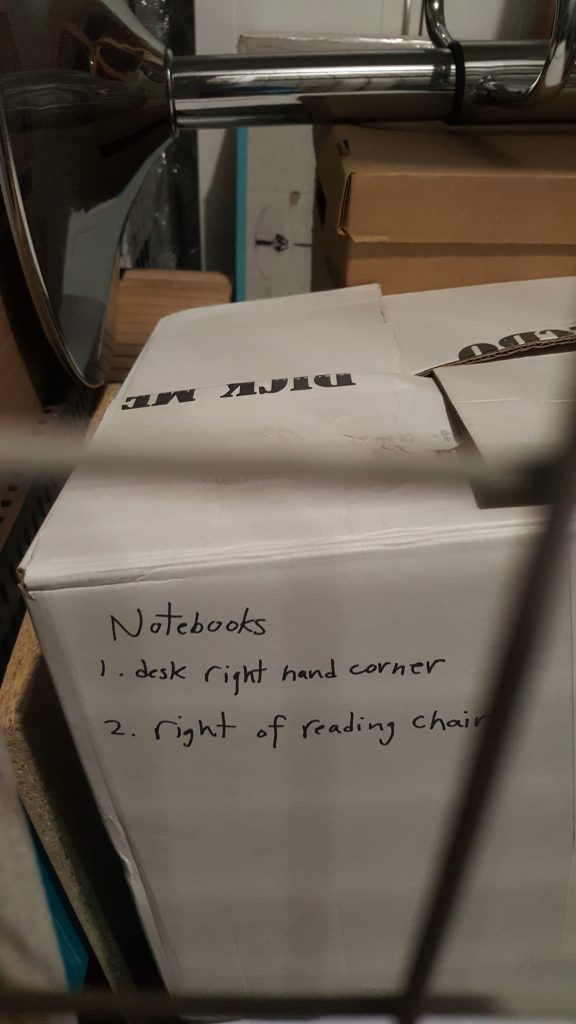
How to Label Things Properly

While retrieving something from storage, I happened to notice a box in my neighbor’s cage. I read the label and instantly experienced three different, but distinct emotions.

  1. As a records and information management (RIM) professional, I inwardly groaned. Nobody would ever find anything in that box. Or even think to open it with such a cryptic description.
  2. Also as a RIM professional, I chuckled! I can still recall some of the worst box names I ever saw. My favorite was “From the 5th drawer in the cabinet behind Nicki’s desk”.
  3. As a fellow human just wanting to get some stuff in storage, I nodded compassionately and with understanding. Before I worked in RIM, I labeled my boxes the same way. Years after I had moved, I found boxes of books at my mother’s house labeled with similar descriptions, such as “books from the bottom shelf,” “books from the 4th shelf,” etc. At the time of packing, the contents of each shelf was most memorable by the location. Years later, the description was meaningless.

Why Labeling is so Important

To people who don’t work in my profession, I probably seem uptight and anal about labeling. I can understand this perspective. Similar to how I felt when I packed up my bookcase, the box descriptions were for me. I would always remember them because it was my system. However, labels are one of the primary ways we find things easily. This includes other people and our future selves.

In my field, we do a lot of records retrievals. Sometimes the retrievals are for documents created decades earlier. The descriptions matter. A lot. Trust me. Sometimes we would search for hours (or days) to find the right documents because they were labeled with poor descriptions like “Jimmy’s important stuff,” or “Planning misc.”

Tips for Creating Meaningful Labels

When creating meaningful labels that will still resonate years later, content and context count.

Be concise – focus on content and contextual keywords that describe your items

Be clear – write descriptions that make sense at the time and for the future. For example, instead of a random location, like “the cabinet behind Nicki’s desk”, use an address. Write out acronyms! You think you will always remember what they stand for, you won’t.

Avoid using the word “miscellaneous” or “misc.” or any other form of it. You think you know what this will mean later, you won’t.

Social Media Whac-a-Mole

With the US Presidential election rapidly approaching, social media companies are scrambling to eliminate interference on their platforms. Both Twitter and Facebook, the two main players, have made changes to their policies and practices.

Some months ago, Twitter decided to ban all political ads. More recently, Twitter enforced its policies more consistently when it started to attach messages and notifications to some of President Trump’s tweets. This was to alert other users that the tweets contained disinformation.

Facebook had a different approach by allowing political ads to run. However, Facebook recently announced that political ads will be banned from the platform one week before election. Additionally, Facebook has a Voting Information site to provide people with facts about how/where to vote in their State.

Will any of this make a difference? Maybe, maybe not.

My impression is that social media companies are playing a giant game of Whac-a-Mole IRL (i.e., in real life). They are constantly catching up and creating “fixes” reactively.

The election has been a problem for social media companies since the 2016 Presidential election, likely even before. Initially M. Zuckerberg denied that Facebook influenced the election. He soon acknowledged the inherent power of a social media platform to reach billions of people. The control given to users to post what they want, e.g., misinformation/disinformation/information, put Facebook in a challenging position. How could they control the content? Should this be their responsibility?

This is in addition to all the other types of challenges facing the global social media platforms such as how to control global language or manage the “infodemic“. Without proper foresight, the companies only react instead of planning adequately for these types of scenarios.

Why Aren’t Social Media Companies More Proactive?

It’s interesting to consider how social media companies ended up in these positions. My guess is there was too much ego and not enough imagination or cynicism in the initial brainstorming sessions. Perhaps the companies didn’t hire enough post-apocalyptic sci-fi enthusiasts who could have predicted some of these scenarios happening.

Honestly, I was shocked so many years ago when Zuckerberg initially denied Facebook played a role in the 2016 Presidential election.

People put their faith so blindly in technology and the internet, that it will only be used for good. However, since the internet’s inception, it has always had a “dark” side. Going forward, all of these aspects need to be considered ahead of time.

What to do When Your Smartphone Gets Wet

About four years after my smartphone and I took an unexpected dunk in Lake Ontario, I found myself in a similar situation. While in a shallow pool, my phone slipped from my fingers. Plunk – right in the water. Argh!

After the last mishap, I purchased a waterproof phone. It wasn’t. *sigh* Initially, everything seemed ok with the wet phone. It wasn’t.

Moments later my phone shut itself off. I mistakenly turned it back on before the phone shut off again to prevent overheating. This time I left it alone.

At home, I removed the sim card and buried it in rice. I used the same rice from four years ago. Twenty-four hours later I anxiously pressed the power button. I can still access everything, but the charge port won’t connect. Fortunately we have a wireless charger.

Throughout the ordeal, I had two main concerns: my photos and how to contact emergency services. After the previous incident four years ago, I moved things off my phone and online. The one exception was the photos. I still haven’t found a good system for managing photos in the cloud.

My other concern was how to contact emergency services. Even though I have an iPad and a computer, neither of those could have been used to call for help. We’re so reliant on our smartphones. It’s easy to forget that in addition to everything it does, it’s also our only way to call 911.

First Steps After Your Smartphone Gets Wet

  1. Stay calm!
  2. Turn it off, immediately.
  3. Remove sim and memory cards and battery.
  4. Dry off as much water as possible. Try to shake it out of the ports.
  5. Let it dry completely (at least 24 hours) before turning it on again. Or before plugging in your charger.
  6. Even if your phone does work, use this as a learning opportunity to move things to the cloud, or invest in better backup systems.

Does Rice Work for Drying Out a Smartphone?

I’ve used rice twice to dry out my soggy smartphone. It’s hard to know if the rice really worked, or if the phone dried out on its own naturally. I don’t know if the rice made a difference. But if you think it works, go for it!

Then save the rice, label it, and store it in a safe place you’ll remember for the next time.

Why Mail-In Voting Is Problematic for the US Presidential Election

This November I will be mailing an absentee ballot for the US presidential election. It is the fourth time I’ve voted this way. In 12 years, the process remains old fashioned, despite the abundance of better options available.

Once every 4 years, I receive an email from my voting district in the States. Attached is an excel file with a list of candidates and a form to print out. The form consists of tightly-spaced rows with no margins. After reviewing the excel sheet, I print the form. Then hand write in my selections.

Once every 4 years, I feel irritated about the length and clunkiness of the US voting process. Prior to receiving my voting information, I must register anew for each election.

This year, a local chapter of Democrats Abroad contacted me with an easy way to register. I felt encouraged that I could fill out and submit the form on my phone. Until I read the fine print. One annoying step left. I have to print it out and send a paper copy. This isn’t the same process as in other States.

Why US Voting Isn’t Standardized

Voting in the US is problematic for many reasons. However, one of the biggest challenges is the lack of standardization in the process. Every State, and sometimes even districts within States, does things differently. States have different timelines about how soon a person can register to vote prior to an election. States have different methods of voting ranging from electronic to pen & paper, plus everything in between.

I couldn’t think about all the issues caused by a lack of standardization without also considering who establishes the standards. Or who should be establishing them. Or if there is one method of voting that could be used by everyone (i.e., in-person vs. electronic vs. paper, etc.).

Why Can’t US Voting Be Modernized?

In 2020, I’m amazed mail-in votes are a popular alternative to voting in-person. It makes sense to think about maintaining social distancing for November. However, why aren’t modern alternatives being considered such as voting electronically? What about being able to register electronically without the added annoyance of also mailing a paper copy?

So much information, disinformation, and misinformation is already flying around about the 2020 US Presidential Elections. Perhaps it has made people distrustful of modern, technology-driven solutions. And sometimes the best way to counter cyber threats is with a low-tech solution, like paper mail-in ballots.

Upping the Online Shopping Game

The pandemic caused swift changes. Some retailers had to move their businesses online practically overnight. They also had to rethink processes about getting goods to customers. And for many of them, their online resources were lacking.

Shopping online is not new. What is new is how normal this is becoming. Retailers need to offer better and more robust online experiences. In addition to improved search options, photos of items and information should be readily available. Better yet, maybe retailers could offer a virtual reality shopping experience.

Grocery Shopping Online – The New Normal

In the early weeks of the pandemic, it was impossible to schedule a grocery pick-up. Time slots were booked solid weeks in advance. Going to the store in-person meant long waits. Or risking exposure to a virus. This was before we knew much about it and how it was transmitted.

Without a lot of great options, we shopped online at the grocery store. It took longer than if I had gone in person. Poor website construction and miserable searching options were the cause. It took hours to find all the items on our grocery list.

Searching on the websites was challenging. Grocery stores contain thousands of items. Being able to narrow down a search is essential. However, the websites offered few options to accomplish this. For example, I usually buy alternative milk, i.e., soy, rice, oat, etc. Shopping in-person for this is easy. I go to the aisle containing all the options and make a selection.

Online shopping, however, turned this into a lengthy process. I was unable to view all the different types of milk at once. I either had to search by brand or by type (e.g., soy, rice, oat). But for people like me, who alternate between all the types, it was challenging.

I’m a Label Reader

It’s true. I read labels for everything. Labels are important. They tell us, as consumers, a lot of information about what we’re buying. For example, clothing labels indicate washing instructions, the country of manufacture, and the materials used. This is all information I care about.

Now that I’m forced to shop online for most things, finding this information is difficult. In many cases, I had to contact retailers and vendors directly to discover where something was manufactured, or what it was made out of.

Consequently, the online experience ended up taking more time than going in person.